For Data Centers
Savings that keep the five nines.
Noda works as a virtual building engineer across data center portfolios, cutting cooling energy and emissions within each facility's operating limits.
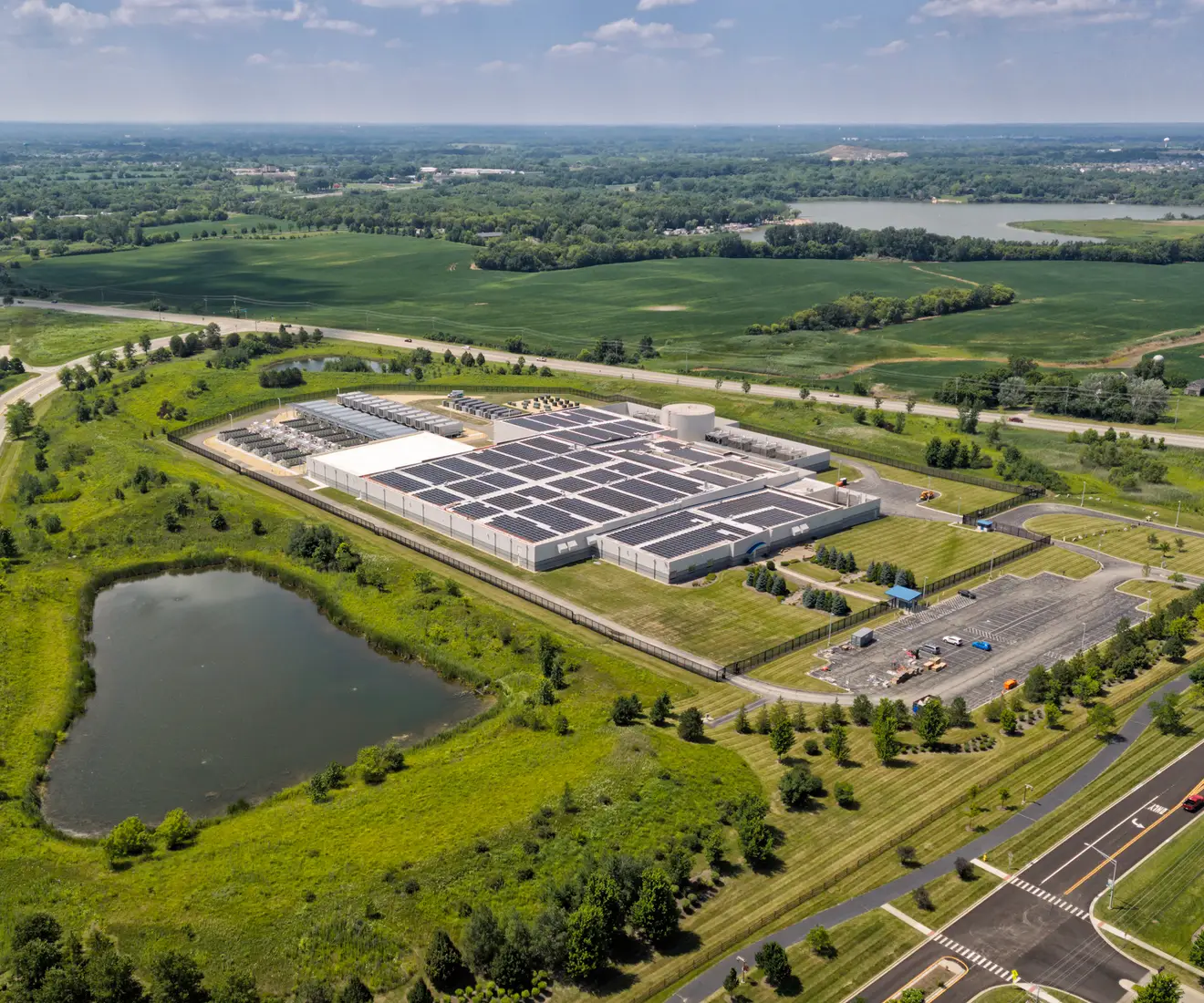
Less overhead on every kilowatt of IT load.
Noda helps data center operators, REITs, and infrastructure investors cut cooling energy and emissions while holding to the operating parameters each facility commits to.
Lower cooling costs within strict operating parameters.
Data center cooling plants run around the clock, so a small inefficiency costs money every hour of the year. Noda's AI agents find chilled water plant changes, such as more free cooling hours and a higher plant delta T, and write up each one as a Project with its estimated annual savings.
Explore the Intelligence Layer- Extend free cooling hoursHX-1$86,420
- Raise chilled water plant delta TCH-1, CH-2$52,370
- Dynamic condenser water setpointCT-1, CT-2$38,910
- Reduce overpumpingCHWP-3$21,640
Catch thermal issues before they affect availability.
Noda's fault detection watches the cooling units serving each data hall for discharge temperatures above setpoint, hunting valves and dampers, and airflow imbalances, so engineers can fix them while there's still margin.
Explore the platform- Discharge Air Temp greater than setpointCRAH-07 · Data hall 2High
- Cycling Damper, VFD Speed or ValveCRAH-12 · Data hall 3High
- Unable to provide cooling to spaceCRAH-03 · Data hall 1Medium
- Status does not equal CommandCRAH-15 · Data hall 3Medium
Benchmark PUE across every site.
Noda brings BMS, metering, and IT load data from each facility into one model, so operators can compare PUE, energy intensity, and carbon performance across a portfolio.
Explore the Independent Data Layer- Corriden DC1-0.06 on last year1.42
- Corriden DC2-0.09 on last year1.36
- Corriden DC3-0.04 on last year1.51
Audit-ready data for Scope 1 and 2 reporting.
Noda measures each completed Project against a weather-adjusted baseline and keeps the energy and emissions record behind it, ready for ESG disclosures and investor reporting.
See Noda for sustainability teamsLower OpEx, same SLAs
Noda's changes lower energy spend without loosening the service levels each facility guarantees.
Centralized visibility
One view of energy, cooling, and equipment performance across mission-critical facilities.
Smarter capacity planning
Plant and cooling performance data across sites informs capacity planning as IT load grows.


Works with the systems you already use.
Noda connects to BMS, metering systems, and IT load monitoring over BACnet/IP, Modbus, or MQTT through the Noda LaunchPad, a secure on‑premises gateway.
Chiller plant results from Noda customers
$40,200 in annual savings and a leaner plant sequence.
What Noda DiagnosedA South Florida luxury oceanfront resort was running all three CHW pumps at 90–100% speed during dual-chiller operation, a textbook overpumping signature. Bypass testing confirmed flow capacity, so dropping DP from 25 to 21 and removing the third pump from sequence cut 335,000 kWh annually.
Related reading


Frequently asked questions
Will Noda's recommendations put uptime at risk?
Noda's recommendations go to the facility's engineering team, and the team decides which to accept. Each recommendation is scoped to the operating parameters the facility already holds to.
Can Noda track PUE?
Yes. With IT load monitoring connected alongside the BMS and meters, Noda tracks PUE by site and across a portfolio.
What hardware does Noda need on site?
The Noda LaunchPad, a gateway on the facility network, reads the trend data the BMS and monitoring systems already record. The BMS keeps its existing programming.
Who is Noda built for in the data center market?
Noda serves data center operators, REITs, and infrastructure investors, from facilities and engineering teams to the sustainability teams reporting on Scope 1 and 2.
AI that never needs a maintenance window.
Continuous analysis of cooling and power across every site.
Get a demo